How to Turn Your Church's Land into a $5 Million Community Impact Project (Faith-Based Development Guide)
- Dec 17, 2025
- 6 min read
I'll be honest with you: when I first heard about churches developing their land into community impact projects, my heart skipped a beat. Not because it sounded impossible, but because I knew firsthand how many congregations are sitting on goldmines they don't even realize they have.
You know that feeling when you're walking through your church property and wondering, "What if we could do more with this space?" Maybe you've looked at that empty lot behind the sanctuary or those underused buildings and felt God stirring something in your spirit. You're not crazy. That stirring might be the Holy Spirit showing you a path to financial freedom AND Kingdom impact.
Here's what I've learned after working with dozens of churches: Your land isn't just real estate: it's a ministry multiplier waiting to happen.
The $5 Million Question Every Pastor Should Ask
"What if our property could fund our mission instead of draining our budget?"
This isn't just wishful thinking. Churches across the country are turning unused or underutilized land into revenue-generating assets that serve their communities while funding their ministries. We're talking about affordable housing projects, community centers, senior living facilities, and mixed-use developments that can generate $100,000 to $500,000+ annually in sustainable income.
But here's the thing that breaks my heart: most churches never explore this option because they think it's too complicated, too expensive, or somehow not "spiritual" enough.
That stops today.
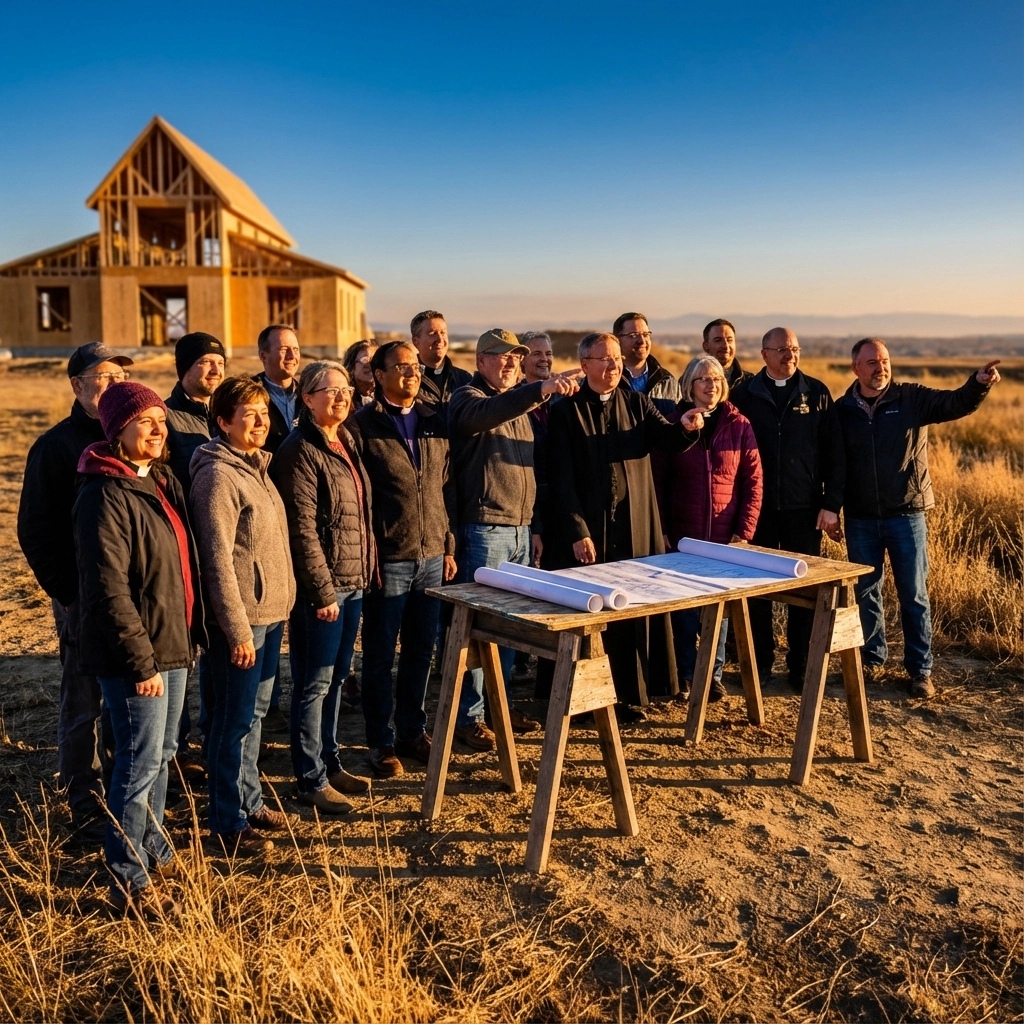
Step 1: Start With Your "Why" (And Get Your Congregation On Board)
Before you touch a shovel or call a single developer, you need to answer the Kingdom questions:
How does this development serve our community's greatest needs?
What would it mean for our ministry if we had an extra $200K annually?
How can we use this project to live out the Gospel in tangible ways?
I've seen too many churches jump into development without getting their congregation aligned first. This is where most projects fail. Your people need to catch the vision before you can move forward.
Here's how I recommend approaching your congregation:
Hold listening sessions, not sales pitches. Ask questions like:
What are the biggest needs in our neighborhood?
How could we better use our property to serve others?
What would it look like if our land generated income for ministry?
Create a vision team of 5-7 committed members who can champion this idea and work through the details. Give them time to pray, research, and dream together.
Be prepared for resistance. Some members will worry about changing the "sacred" nature of your property. Others might fear the project will fail. Address these concerns head-on with patience and lots of communication.
Step 2: Assess Your Property's Potential
Not every church property is ready for development, but more are suitable than you might think. Here's what to evaluate:
Physical Assessment:
Size and layout of available land
Soil conditions and environmental factors
Accessibility and parking considerations
Utilities and infrastructure capacity
Community Needs Analysis:
Affordable housing shortage in your area
Senior living needs
Community service gaps
Local employment opportunities
Financial Feasibility:
Current property value and development costs
Potential rental income or sale proceeds
Tax implications and benefits
Long-term cash flow projections
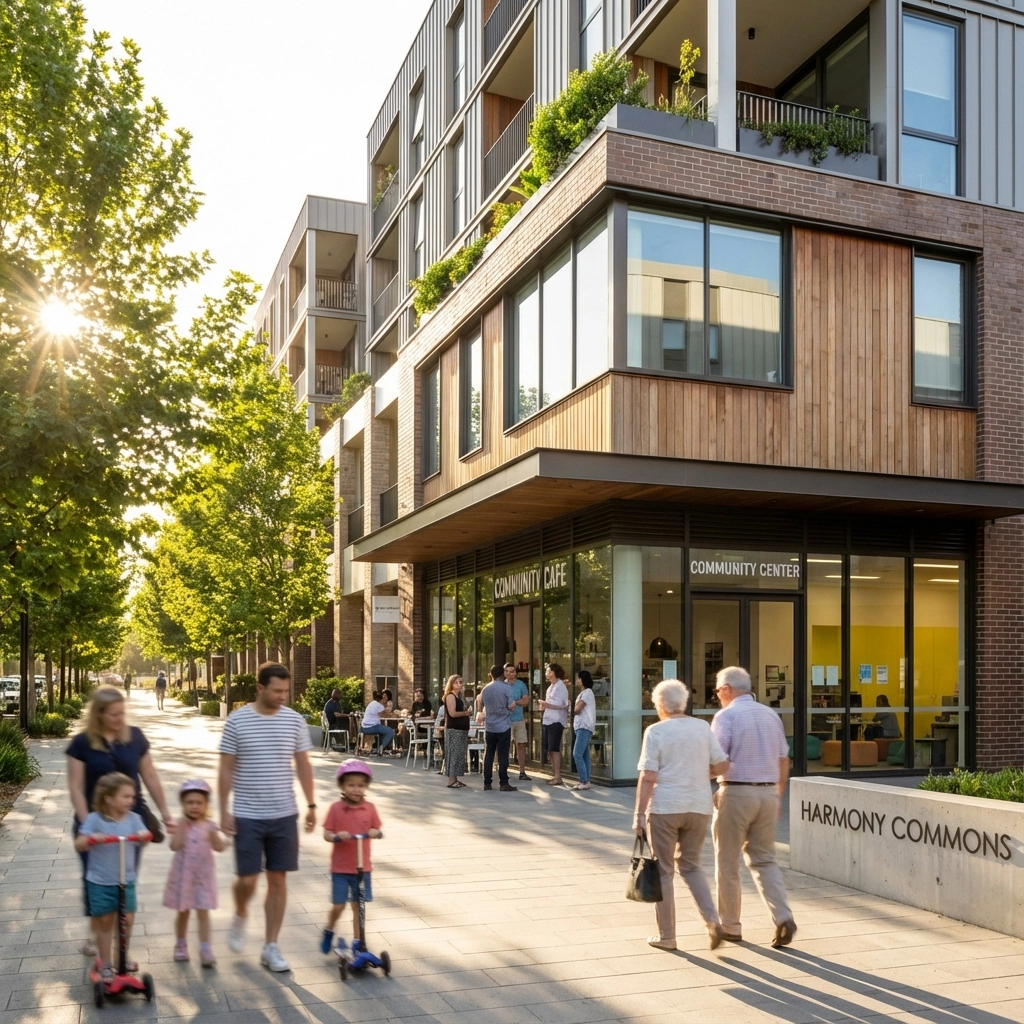
Step 3: Choose Your Development Model
Based on my experience, here are the most successful models for churches:
The Ground Lease Model (My Personal Favorite)
You keep ownership of the land but lease it to a developer for 50-99 years. They build and manage the property, you receive steady lease payments. This protects your long-term interests while generating immediate income.
Mixed-Use Development
Combine affordable housing with community services: maybe a daycare, community center, or senior services. This maximizes both impact and income potential.
Senior Living Focus
With aging Baby Boomers, senior housing is in huge demand. Many churches are perfectly positioned to serve this market while generating substantial revenue.
Community Business Incubator
Create affordable spaces for local entrepreneurs and small businesses. This builds jobs in your community while providing rental income.
Step 4: Find the Right Development Partner
This decision will make or break your project. You need more than just a developer: you need a partner who understands your mission.
Look for developers who:
Have experience with faith-based projects
Share your commitment to community benefit
Offer flexible financing structures
Understand the unique challenges churches face
Red flags to avoid:
Developers who rush your decision-making process
Anyone who doesn't respect your congregation's input
Partners who focus only on profit maximization
Companies without references from other churches
Step 5: Access Funding and Technical Support
The beautiful thing about faith-based development is that you don't have to figure this out alone. Several national organizations exist specifically to help churches navigate this process:
LISC Faith-Based Development Program provides coaching, feasibility studies, and connections to experienced partners. They've helped advance over 1,300 affordable homes.
Enterprise Faith-Based Development Initiative offers tools, funding, and training designed specifically for houses of worship.
Trinity Church's Mission Real Estate Development provides portfolio assessments and connects churches with architects and developers.
These programs often provide grants or forgivable loans for predevelopment costs, so you can explore feasibility without financial risk.

Step 6: Navigate Community Relations and Politics
Here's where your congregation's social capital becomes invaluable. Your members are your greatest asset in building community support.
Successful churches mobilize their congregations to:
Visit neighbors door-to-door explaining the project
Attend city council meetings and planning commission hearings
Organize petition drives and community forums
Leverage personal relationships with local leaders
"We brought over 200 church members to the city council vote. The mayor later told us he'd never seen such organized, passionate support for a development project." - Methodist congregation in Tennessee
The Born Again Church Success Story
Let me share a story that illustrates what's possible. Born Again Church in Nashville recently broke ground on an affordable housing project that will transform their community while securing their financial future.
They used a ground lease model, retaining land ownership while partnering with an experienced developer. The structure included front-loaded payments giving them immediate capital for campus improvements. Most importantly, they spent four months building trust with their development partner: beginning and ending every meeting in prayer.
The result? Deeply affordable housing that honors their congregation's legacy while generating sustainable income for ministry.
Overcoming the Biggest Obstacles
"We don't have enough money to get started." Many funding programs provide grants for predevelopment costs. You can explore feasibility without financial risk.
"Our congregation will never agree to this." Start with education and vision-casting. Most resistance comes from fear of the unknown.
"We don't know anything about real estate development." That's exactly why technical assistance programs exist. You provide the land and vision; they provide the expertise.
"What if the project fails?" Proper due diligence and experienced partners minimize this risk. The bigger risk is watching your ministry struggle financially while sitting on valuable assets.
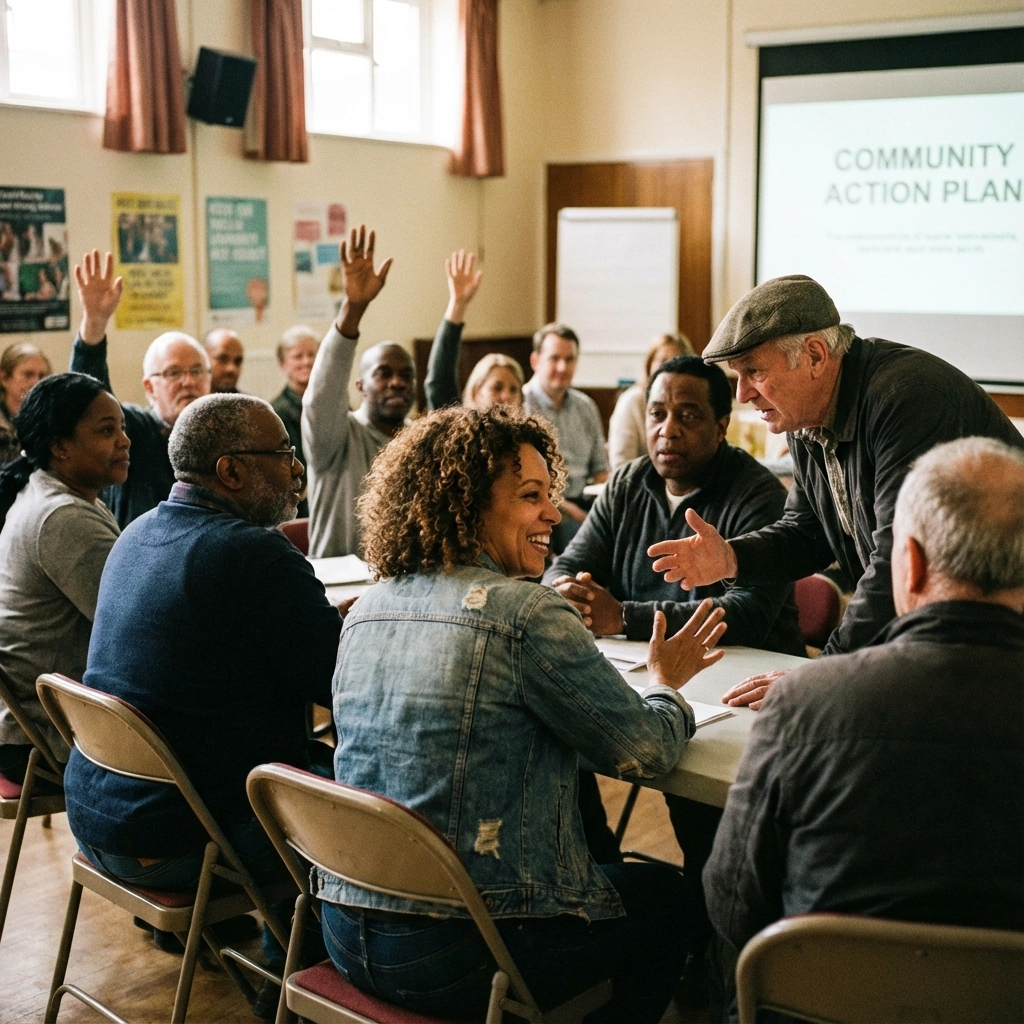
Your Next Steps Start Today
If God is stirring something in your heart about your church's property potential, don't wait for "perfect" timing. Here's what I recommend you do this week:
Schedule a conversation with your leadership team about your property's potential
Research community needs in your area: housing, services, employment
Contact one of the technical assistance programs I mentioned for a preliminary assessment
Begin praying and fasting as a leadership team about God's vision for your property
The Kingdom Impact Multiplier Effect
When churches develop their land strategically, beautiful things happen:
Financial freedom to focus on ministry instead of budget survival
Community transformation through affordable housing and services
Job creation that strengthens your neighborhood
Deeper congregational purpose as you live out the Gospel tangibly
Generational impact that extends far beyond your current membership
Your church's land represents more than square footage: it's Kingdom potential waiting to be unleashed. The question isn't whether you can afford to explore this opportunity. The question is whether you can afford not to.
I've seen too many churches struggle financially while sitting on assets that could transform both their ministry and their community. Don't let that be your story.
What if, five years from now, your church was completely debt-free, fully funding your mission work, and serving as a model for community development? What if your property became the catalyst for transformation you've been praying for?
That future is more possible than you think. It starts with one conversation, one vision meeting, one step of faith.
Are you ready to turn your church's land into a Kingdom impact project? Let's explore what God might have in store for your congregation and community.
The harvest is ready. Your land might just be the field where it begins.
Ready to explore your church's development potential? Visit our resources page for more guidance on faith-based community development, or reach out for a consultation about your specific situation to Pastor Clark Ortiz. You can schedule a short 30 minute ZOOM call by visiting www.Calendly.com/ClarkOrtiz

Comments